Moisture Mapping
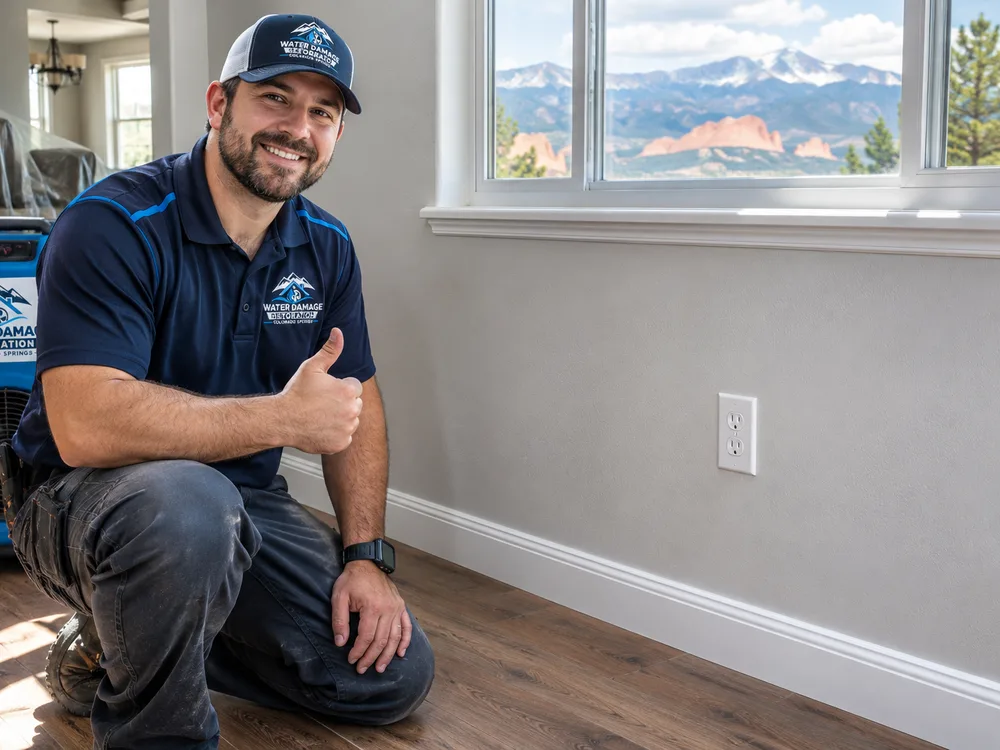
A contractor checks beyond the visible stain to identify damp drywall, subflooring, insulation, trim, and concealed cavities.
Serving Colorado Springs, Colorado & surrounding areas
Calls answered around the clock
Water Damage Repair · Colorado Springs
One call connects you directly with a local contractor who handles water damage cleanup, drying, and property repairs.
✓One direct call
✓Local water damage contractor
✓You decide what happens next
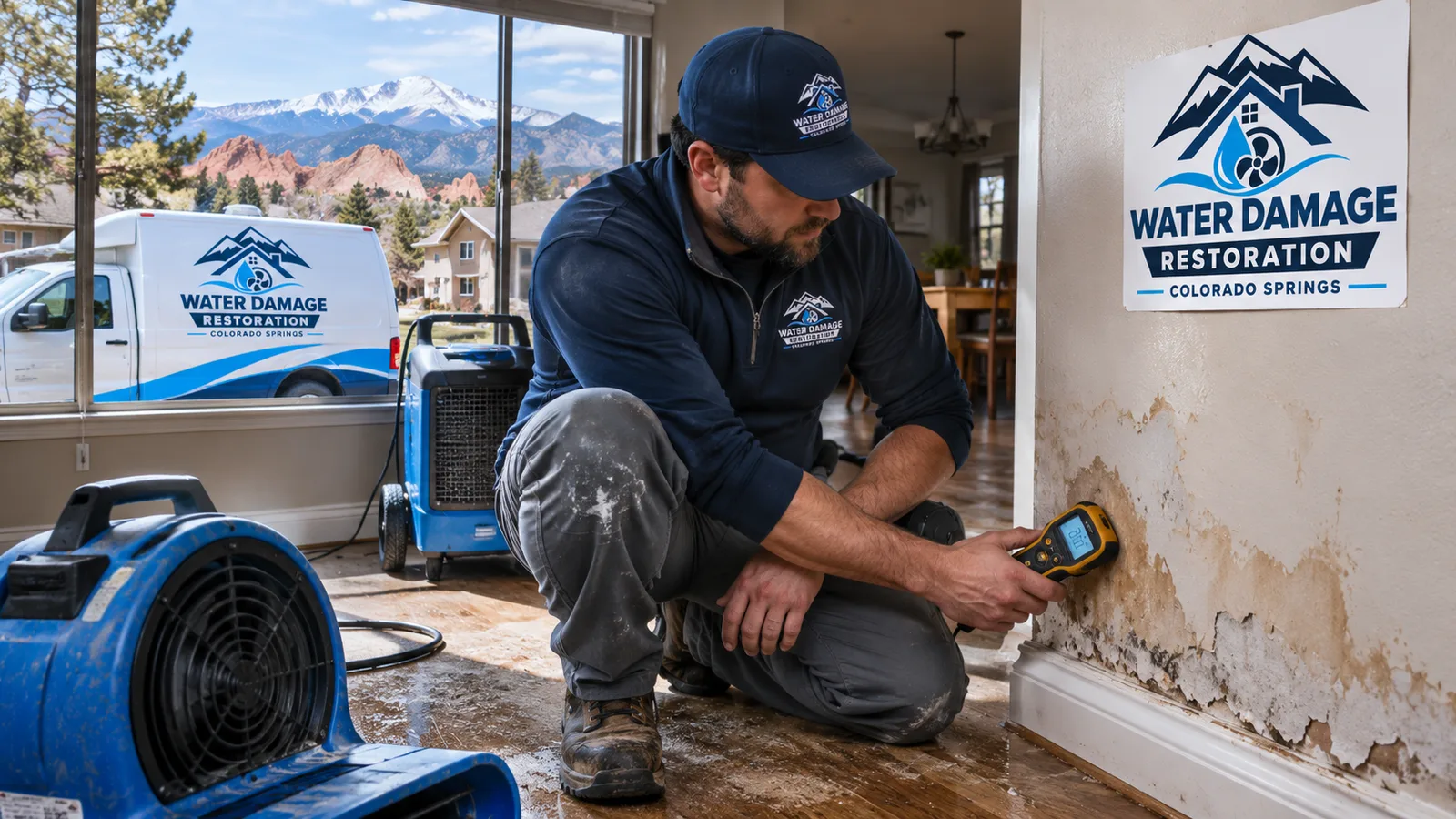
Water damage in Colorado Springs homes often results from burst supply lines, leaking appliances, damaged roofs, plumbing backups, or groundwater entering through the foundation. The visible puddle may be only part of the problem. Water can move beneath flooring, wick into drywall, soak insulation, and remain inside wall or ceiling cavities.
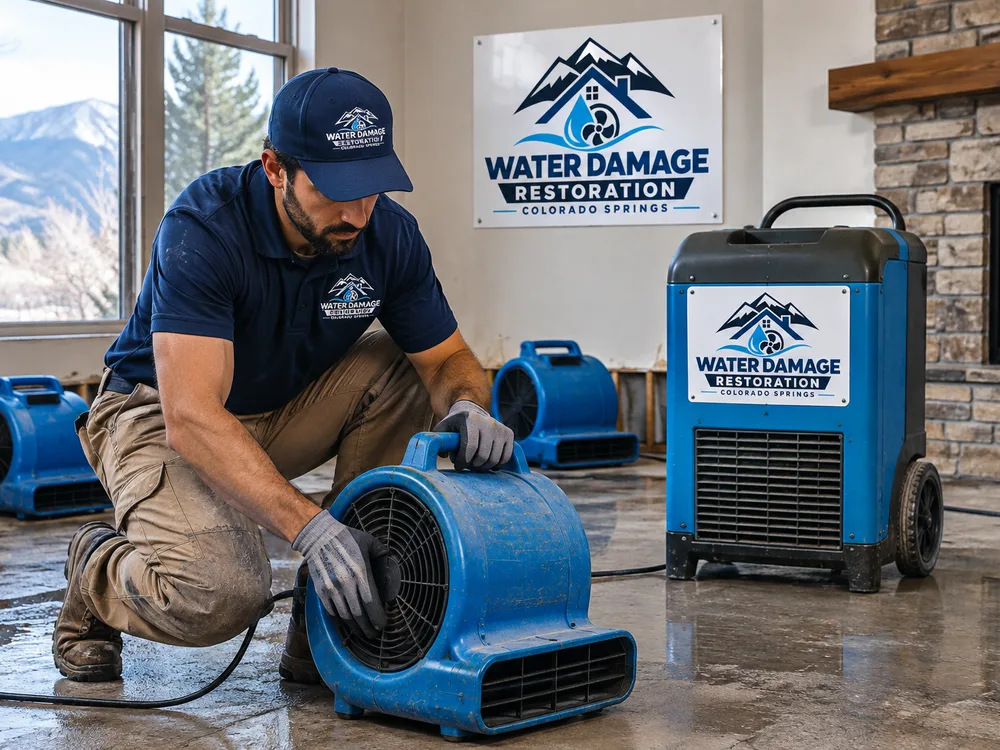
A contractor first determines where the water traveled and whether the source has stopped. The assessment may include moisture-meter readings, thermal imaging, inspection of baseboards and flooring, and checks inside accessible cavities. Standing water is extracted before air movers and dehumidifiers are positioned to dry affected materials. Contractors track moisture readings during drying rather than relying on surfaces that merely feel dry.
Materials that remain sound may be dried and cleaned. Swollen particleboard, delaminated flooring, saturated insulation, and deteriorated drywall may require removal. After the affected area reaches suitable moisture levels, repair can include replacing drywall, trim, insulation, flooring, or cabinetry components. Sewage-contaminated water requires different containment, removal, and cleaning practices than water from a supply pipe.
Colorado Springs has cold winters, summer thunderstorms, and periods of intense rainfall. Frozen plumbing, roof leaks, exterior drainage problems, and water entering lower levels can therefore produce very different repair scopes. Homes with basements need careful checks along foundation walls and under finished flooring. In older neighborhoods such as Old Colorado City, layered finishes and older assemblies can conceal the path water took.
One call through Water Damage Restoration Colorado Springs connects you with water damage restoration contractors around Colorado Springs, CO who serve the area, and you talk with the contractor directly about the affected property.
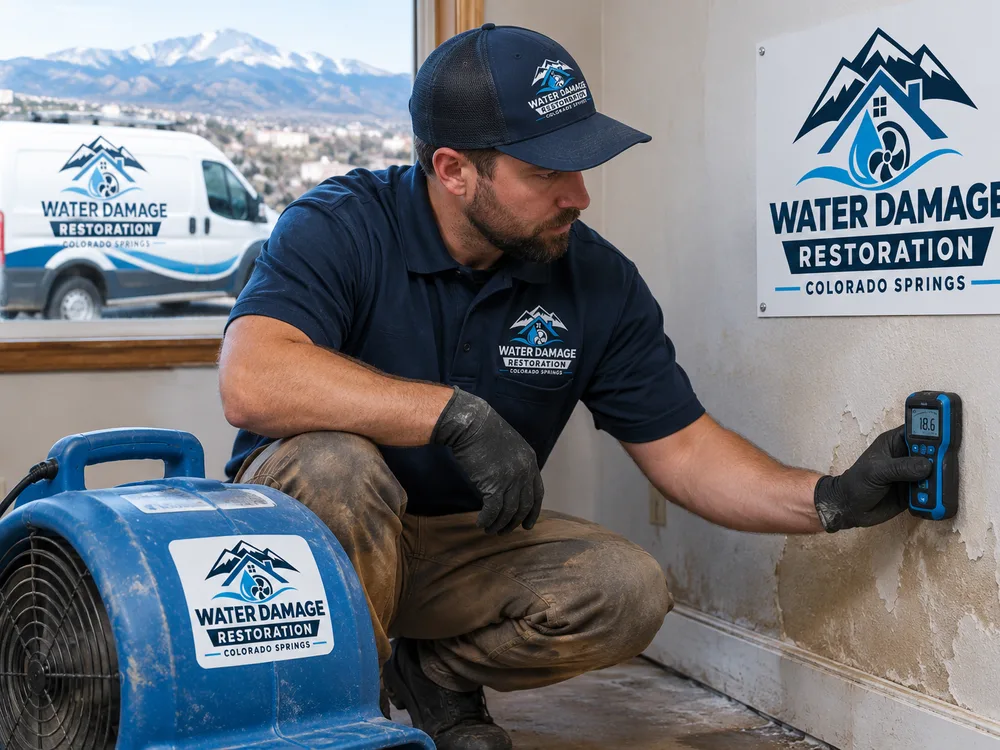
A contractor checks beyond the visible stain to identify damp drywall, subflooring, insulation, trim, and concealed cavities.
Standing water is removed so drying equipment can address moisture held within porous building materials.
Air movers and dehumidifiers are arranged around the affected materials, with moisture readings used to monitor drying conditions.
Materials that cannot be cleaned or dried adequately may be removed while unaffected finishes remain in place when practical.
The scope may include surface cleaning, odor treatment, drywall replacement, trim work, painting, flooring repair, or cabinet component replacement.
One call connects you with a local contractor. You discuss the condition, receive the quote from that contractor, and decide whether to proceed.
Step 1 of 5
Enter your ZIP code and you are connected directly with a local water damage contractor who serves that ZIP. There is no contact form or email wait.
Step 2 of 5
You talk with the contractor about access, visible damage, when the water was noticed, and whether the source has been stopped. The contractor explains availability and the next practical step.
Step 3 of 5
The contractor identifies the water source and category, traces moisture migration, and determines which materials may be dried and which may need removal.
Step 4 of 5
The contractor provides the quote and explains extraction, drying, cleaning, removal, and repair items. You can ask what is included and decide whether to authorize the work.
Step 5 of 5
If you proceed, the contractor performs the agreed work. Drying may continue across multiple visits because equipment placement and moisture readings can change as materials release water.
Water can spread beyond the stain you can see. One call connects you directly with a Colorado Springs contractor who handles moisture assessment, drying, cleanup, and repair.
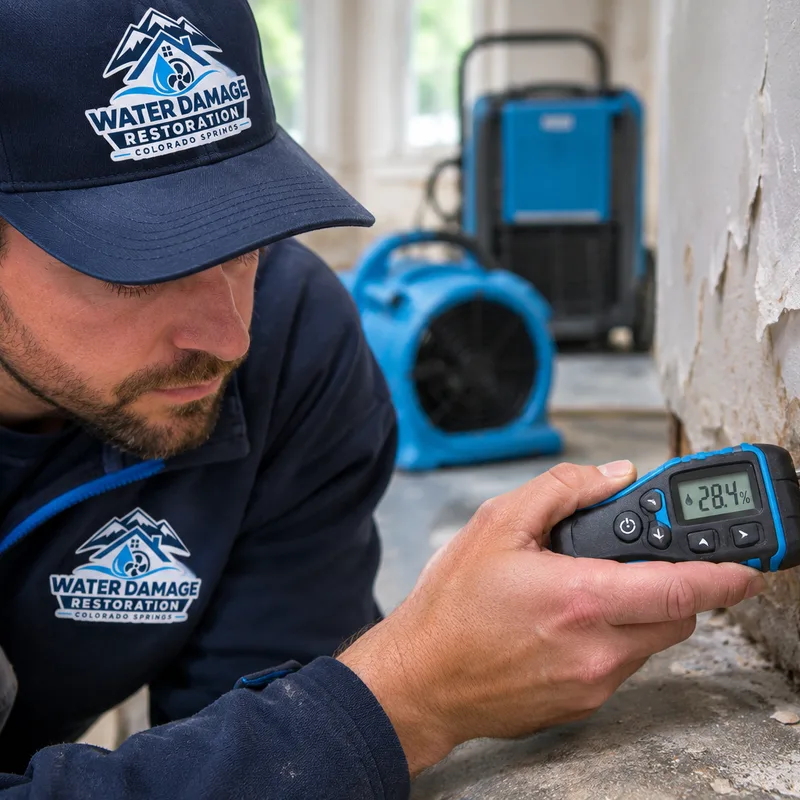
The decision is based on the material, contamination level, physical condition, and measured moisture. Solid wood and structural framing can often be dried when they remain sound, while swollen composite materials, saturated insulation, and delaminated finishes may need removal. Ask the contractor to identify each removal item and explain why drying is not suitable.
Water-damaged drywall does not always require full replacement. A contractor considers the water category, exposure time, loss of strength, visible swelling, joint damage, and whether the wall cavity can be dried. Limited removal near the floor may provide access to wet insulation or framing without taking down the entire wall.
Removing standing water does not remove moisture held inside porous materials. Drywall paper, wood framing, subflooring, and insulation can remain damp after the surface appears dry. Repeated readings show whether drying is progressing and help the contractor decide when equipment can be removed.
Ask which rooms and materials are included, what will be removed, how drying progress will be documented, and whether reconstruction is part of the quoted work. You can also ask who will move contents, how dust will be contained, and what warranty terms the contractor offers. The contractor provides the quote, and you decide whether the scope fits your property.
Some flooring can remain when the material is stable and moisture can be removed effectively. Carpet may be lifted or removed depending on contamination and backing condition. Laminate and engineered products can swell or delaminate, while tile may conceal moisture in underlayment or subflooring. The contractor should test adjoining areas before recommending drying or removal.
Basement water can spread behind finished walls and beneath floating floors before it becomes obvious. The contractor should check foundation-wall edges, sill areas, insulation, base plates, and flooring transitions. The source also matters because groundwater entry, a plumbing leak, and a drain backup require different cleanup decisions.
The active source should be stopped or controlled so materials are not repeatedly wetted. Depending on the cause, that may involve shutting off a supply line, repairing plumbing, protecting a roof opening, or correcting exterior water entry. Drying and source repair can be coordinated, but the contractor should explain which work falls within the proposed scope.
Pick up the phone and get connected with a contractor who serves Colorado Springs and the surrounding area. Discuss the affected property directly, receive the contractor's quote, and decide what happens next.