
Visual assessment
The contractor looks for visible growth, staining, warped materials, deteriorated finishes, condensation, and signs of past or active water entry.
Serving Colorado Springs, Colorado & surrounding areas
Calls answered around the clock
Mold Inspection · Colorado Springs
One call connects you directly with a local mold inspection contractor who serves your area.
✓One direct call
✓Local inspection contractor
✓You decide what happens next
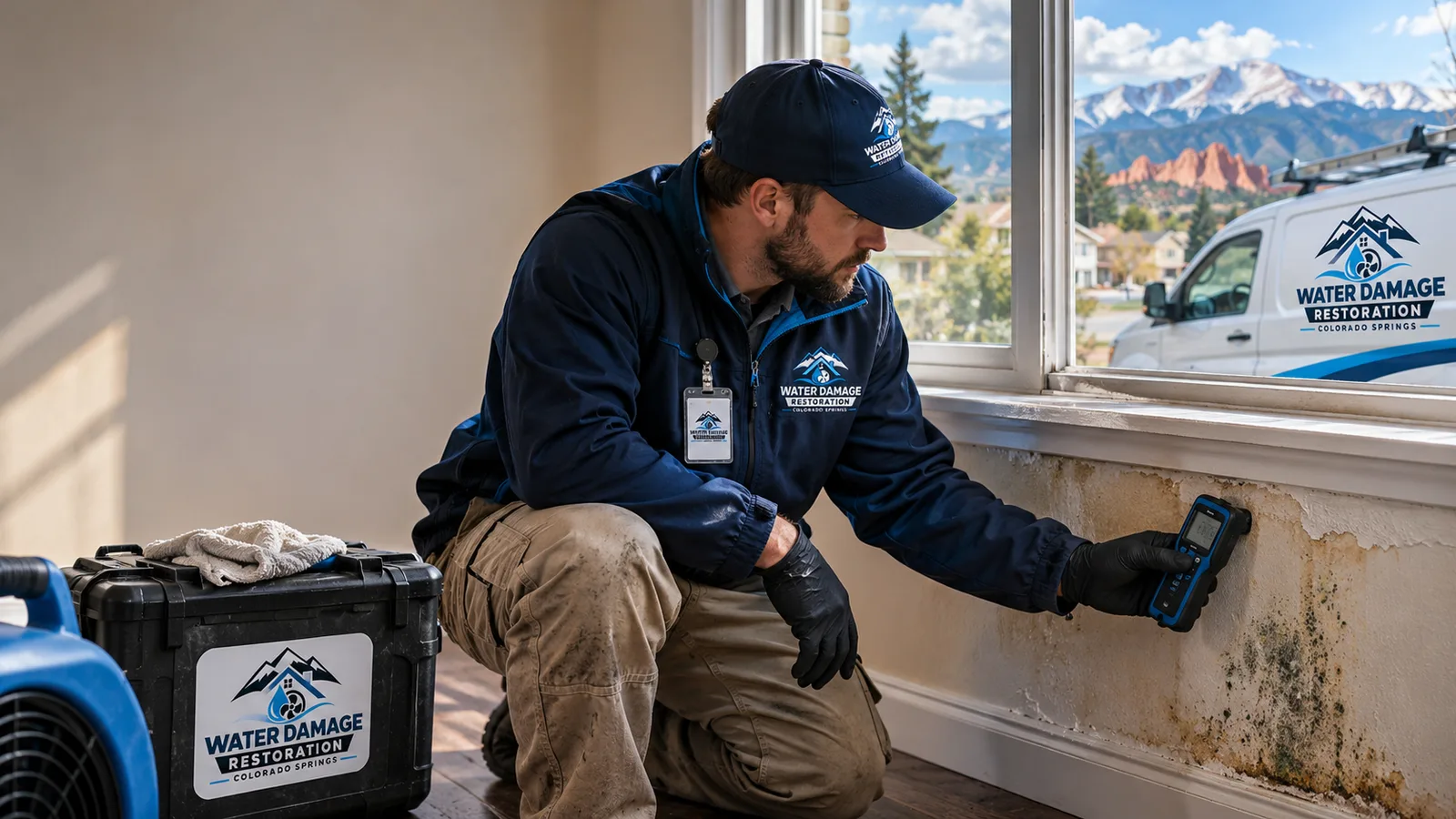
A mold inspection in Colorado Springs helps identify visible growth, moisture conditions, and areas that may need closer investigation. It can be useful after a plumbing leak, roof leak, appliance overflow, groundwater intrusion, or a period of indoor condensation. Persistent odors, staining, peeling finishes, and recurring dampness are also reasons to speak with an inspector.
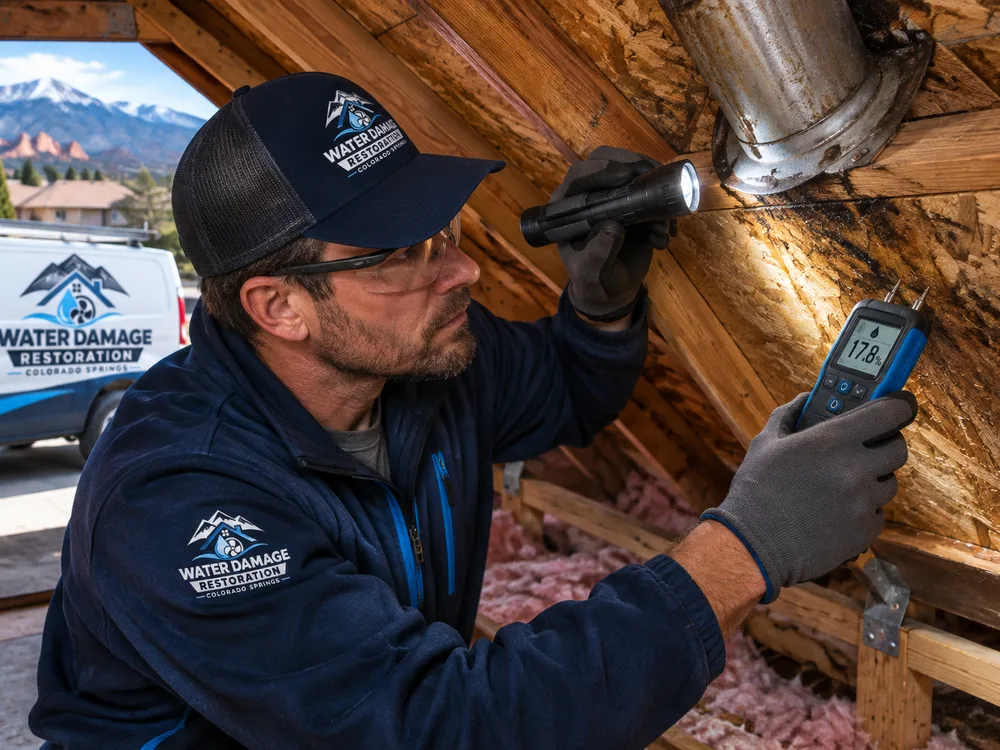
An inspection normally starts with the building history and a visual review of the affected rooms. The contractor may check drywall, baseboards, cabinets, flooring, attic materials, crawl spaces, plumbing penetrations, and the areas around windows or exterior walls. Moisture meters and thermal imaging can help locate unusual moisture patterns, but neither tool identifies mold by itself. Air or surface samples may be recommended when laboratory information would affect the next decision.
Colorado Springs has a generally dry climate, but snowmelt, summer thunderstorms, plumbing failures, and indoor humidity can still leave building materials wet. In older neighborhoods such as Old Colorado City, an inspection may involve plaster walls, older plumbing routes, or basements with several past alterations. Broadmoor properties may have larger rooflines and lower-level rooms that require a wider moisture review. In Briargate, inspectors may focus on plumbing connections, attic ventilation, windows, and finished lower levels according to the concern reported by the homeowner.
We also connect callers with local water damage restoration contractors serving Colorado Springs when active water damage is part of the problem, while mold inspection remains a distinct process for documenting moisture concerns and suspected affected areas. You speak with the contractor directly, discuss the property, and decide whether to proceed.
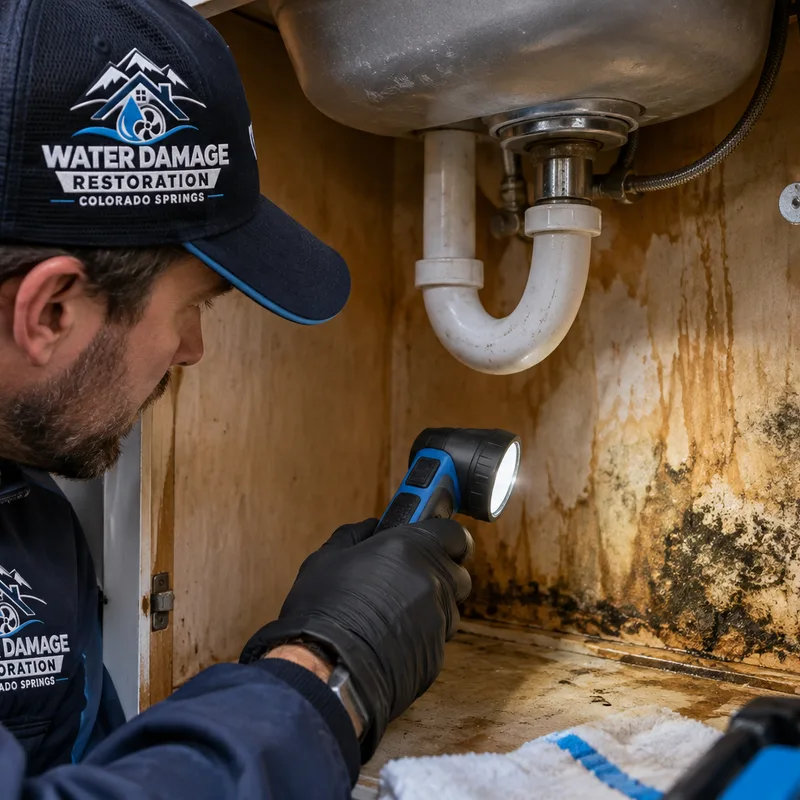
The contractor looks for visible growth, staining, warped materials, deteriorated finishes, condensation, and signs of past or active water entry.
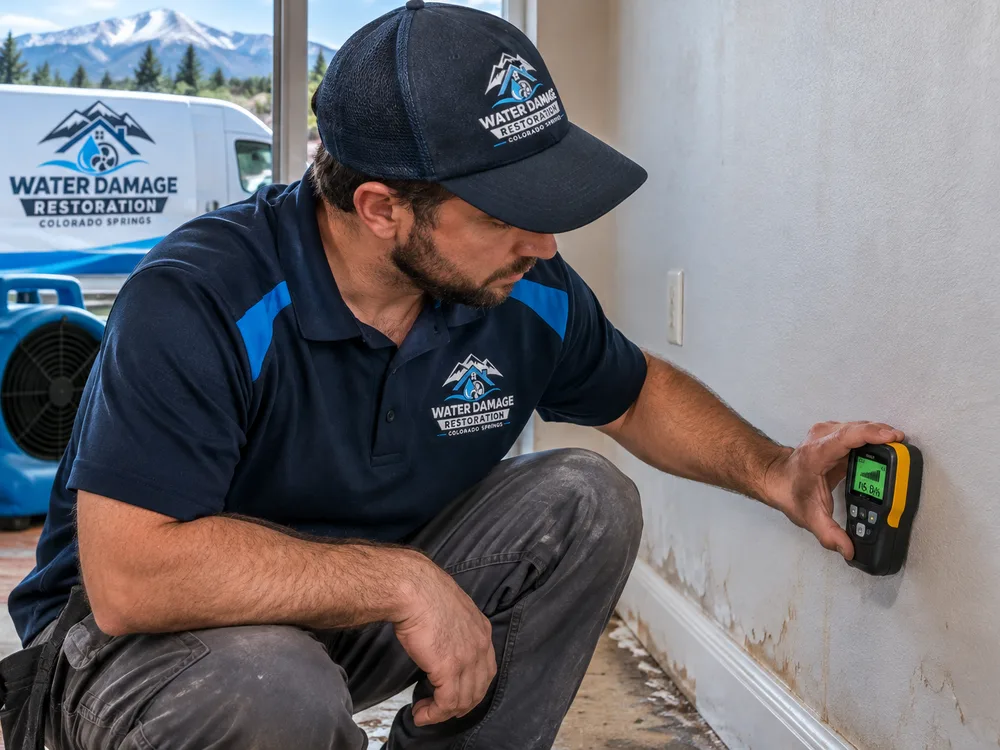
Pin or pinless moisture meters may be used to compare materials and locate damp areas that are not obvious from the surface.
When sampling is appropriate, the inspector may collect air, tape-lift, or swab samples for laboratory analysis. Sampling should answer a defined question rather than replace the physical inspection.
A useful inspection considers why materials became damp. Possible sources include plumbing, exterior water entry, roof defects, condensation, and poor ventilation.
Findings can help define affected rooms, materials that need further evaluation, and questions to address before cleanup or repairs begin.
One call connects you with a contractor who handles mold inspection work in Colorado Springs and surrounding communities. The contractor provides the quote, and you decide what happens next.
Step 1 of 4
Enter your ZIP code and you are connected directly with a local mold inspection contractor who serves that area.
Step 2 of 4
You can explain when the moisture event occurred, where odors or staining appear, whether materials still feel damp, and whether previous cleanup has been attempted.
Step 3 of 4
The contractor explains which rooms or building areas should be examined, whether moisture mapping is appropriate, and whether sampling would provide useful information.
Step 4 of 4
The contractor provides the findings and any quote directly. You can ask what evidence supports the recommendations and decide whether further testing, moisture correction, or remediation is warranted.
Stop working through lists of contractors. One call connects you directly with a local contractor who handles mold inspections in the Colorado Springs area.
Arrange an inspection when there is visible suspected growth, a persistent musty odor, unexplained staining, or a known moisture event that may have reached concealed materials. An inspection can also help when the same damp area returns after surface cleaning.
No. Air testing is useful only when the results can answer a specific question or guide a decision. A careful visual and moisture inspection often provides more useful information about the source and extent of a localized problem. Ask the contractor why a proposed sample is needed and how the result would change the next step.
No. A moisture meter measures or estimates moisture conditions in a material; it does not identify mold. The reading helps the inspector locate damp materials and compare the suspected area with dry reference areas.
Inspection evaluates conditions, documents affected areas, and may include sampling. Remediation addresses contaminated materials and controls their removal or cleaning. Separating those scopes can make it easier to understand what was found before discussing corrective work.
Not necessarily. The contractor generally begins with noninvasive observations, moisture readings, and accessible building areas. If evidence points to a concealed problem, the contractor can explain whether a small inspection opening or another investigative method is justified. The homeowner decides whether destructive inspection proceeds.
Ask which moisture source is active, which findings are confirmed, which are suspected, and whether any recommendation depends on laboratory results. Also ask which materials are affected, whether containment may be needed, and how post-remediation verification would be handled if cleanup occurs.
The region's dry air does not prevent indoor mold when building materials remain wet. Snow, thunderstorms, roof drainage problems, plumbing leaks, and condensation can create localized moisture that persists inside wall cavities, attics, cabinets, or finished lower levels.
Leave the area undisturbed when practical until you have spoken with the contractor. Wiping, coating, or removing material can obscure visible evidence and may spread particles. Avoid running fans across a suspected affected area unless a contractor advises otherwise.
Call and get connected with a local mold inspection contractor who serves Colorado Springs and the surrounding area. You talk with the contractor directly, review the proposed scope, and decide what happens next.