Water Source and Category
The contractor identifies where the water came from, whether the source has stopped, and what contamination risks affect handling and material removal.
Serving Colorado Springs, Colorado & surrounding areas
Calls answered around the clock
Flood Restoration · Colorado Springs
One call connects you directly with a local restoration contractor who handles flood cleanup in your area.
✓One direct call
✓Local flood restoration contractor
✓You decide what happens next
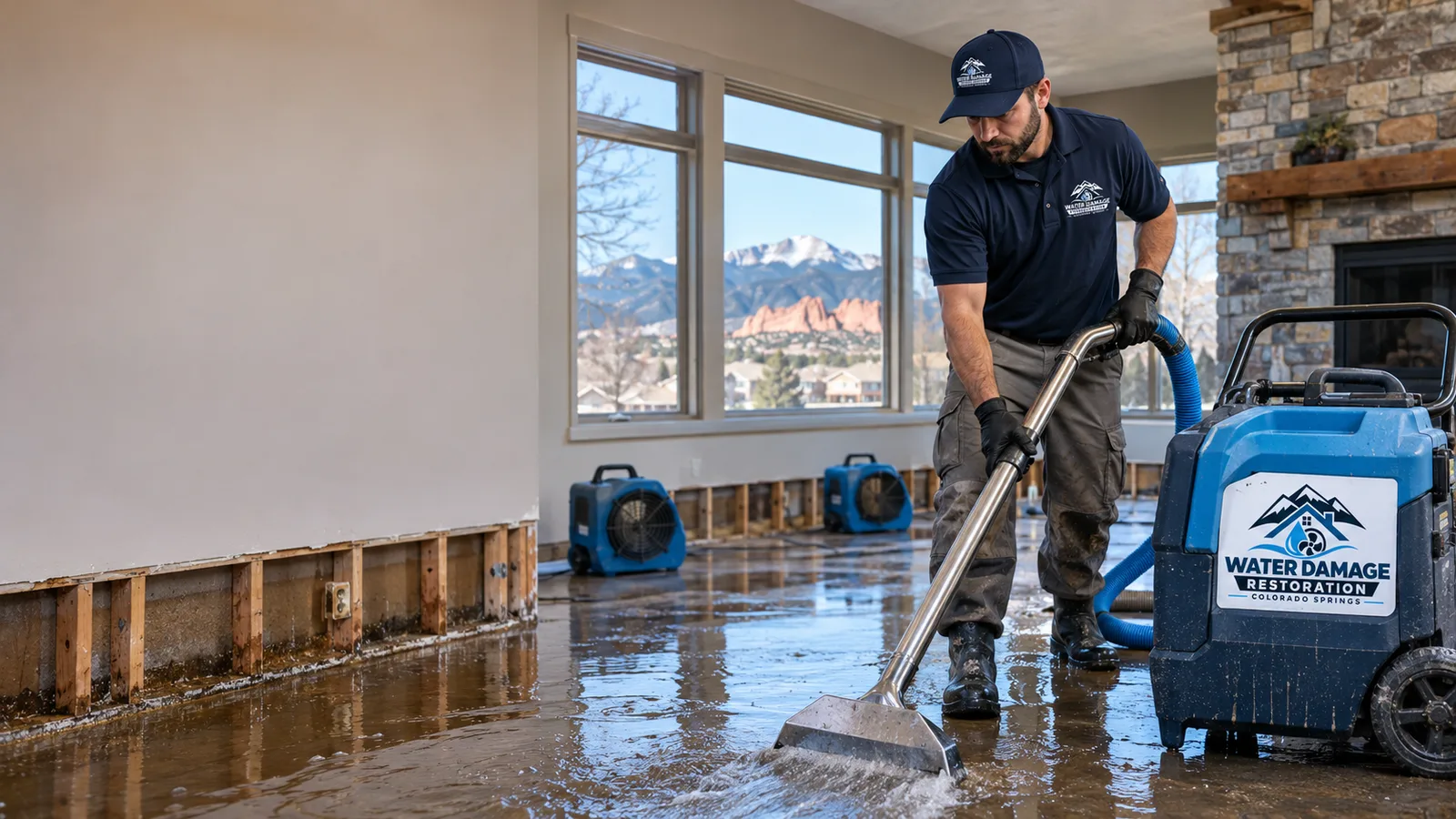
Flood damage restoration in Colorado Springs usually starts with controlling the water source when that can be done safely. A contractor then inspects affected rooms, identifies materials that are wet, and determines whether water has reached wall cavities, insulation, subflooring, cabinets, or mechanical spaces.
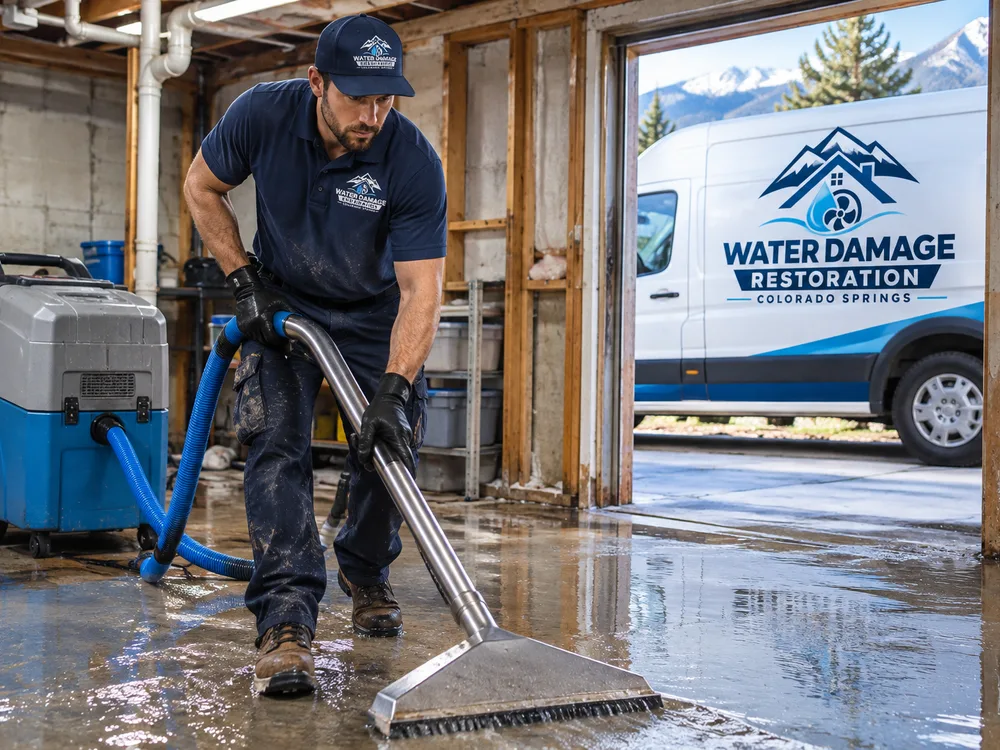
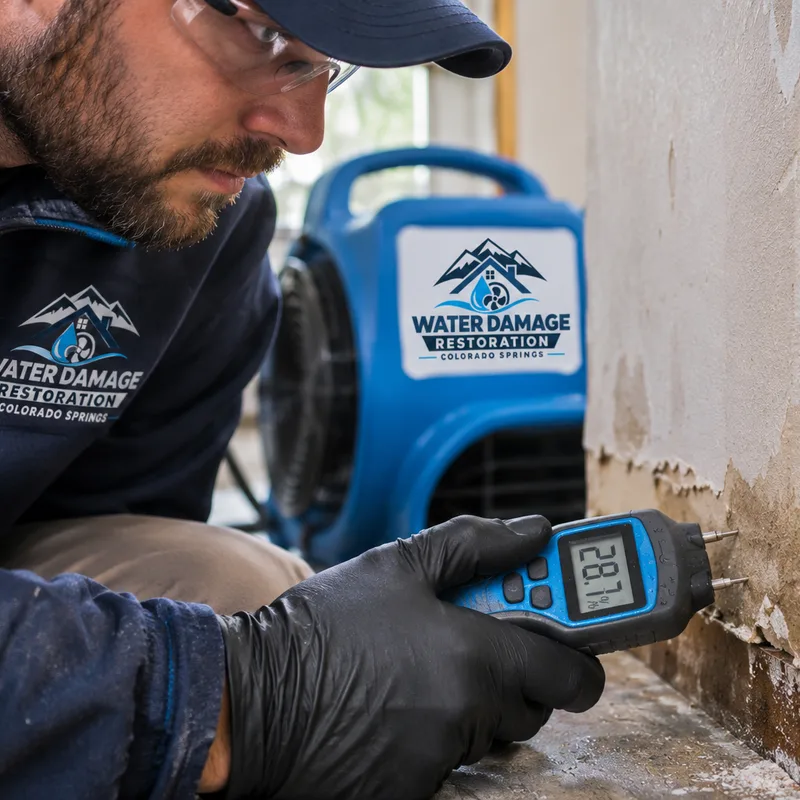
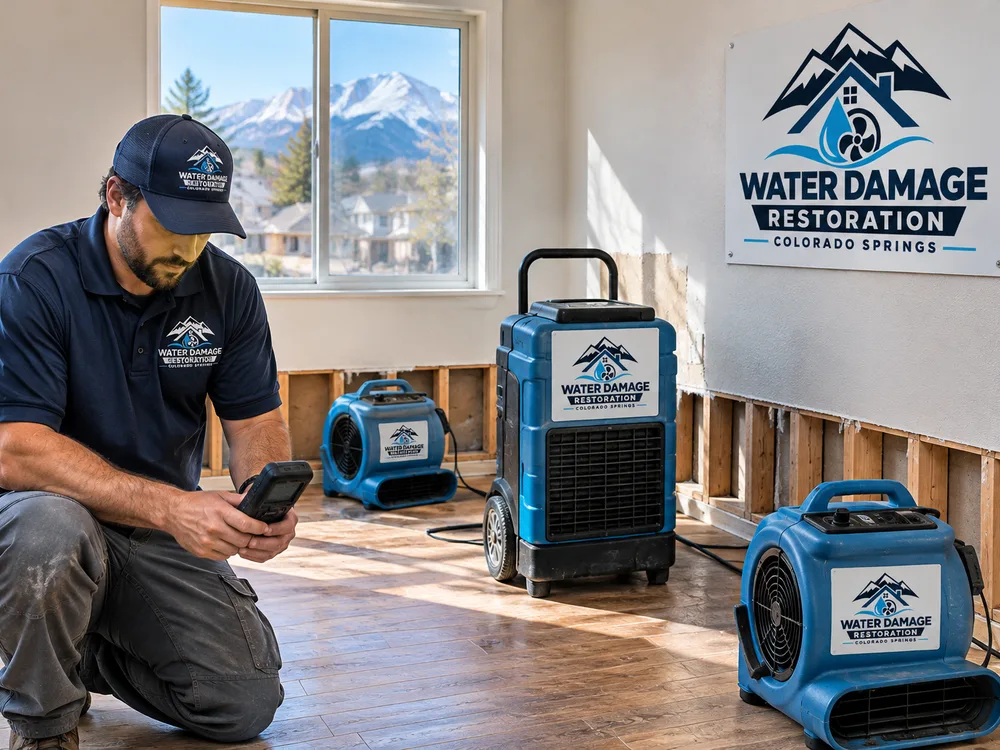
Standing water is removed with extraction equipment. The contractor may lift carpet, remove saturated pad, detach baseboards, open selected wall areas, or take out materials that cannot be dried or cleaned adequately. Air movers and dehumidifiers control the drying environment, while moisture meters help track conditions inside materials rather than relying on surfaces that merely feel dry.
The water source influences the cleanup plan. Water from a supply line is handled differently from groundwater, drain water, or sewage. Contractors commonly classify contamination and assess how far water traveled before deciding what may be dried and what should be removed. Floodwater that entered from outdoors can carry soil, organic matter, and other contaminants, so porous materials may require more extensive removal.
Colorado Springs can receive intense thunderstorms and hail during the warmer months, while freezing weather can split pipes or damage plumbing connections. Properties near slopes or low points may also collect runoff when drainage is overwhelmed. In older areas such as the Old North End, contractors may encounter plaster, wood flooring, and concealed wall cavities. Broadmoor properties can have finished lower levels where water travels behind trim and beneath flooring before it becomes obvious. In newer neighborhoods such as Briargate, supply lines, appliance connections, and finished basements can still spread water across multiple rooms.
If the problem is a pipe leak, appliance failure, or other indoor source rather than outdoor flooding, water damage restoration may involve many of the same extraction and structural-drying methods. The contractor determines the scope after inspecting the affected materials.
The contractor identifies where the water came from, whether the source has stopped, and what contamination risks affect handling and material removal.
Water can move under floating floors, through carpet pad, along wall plates, and into adjoining rooms. Inspection should extend beyond the visible wet area.
Drywall, insulation, engineered flooring, carpet, hardwood, cabinets, and subfloors react differently to saturation. The contractor evaluates each material separately.
Wet outlets, energized equipment, sagging ceilings, unstable flooring, and contaminated water require caution. Homeowners should avoid entering an area that appears unsafe.
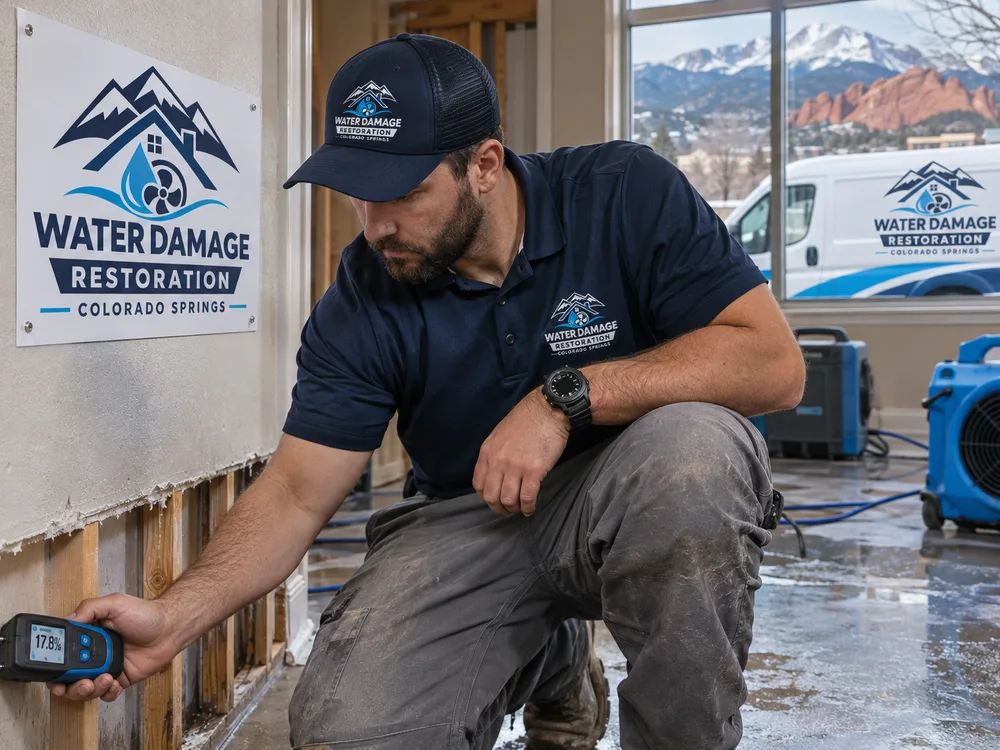
Moisture readings, room temperature, humidity, and airflow guide equipment placement. Drying progress should be measured rather than judged by touch alone.
Furniture and stored belongings may need to be moved so extraction equipment can reach wet surfaces and air can circulate around affected assemblies.
Step 1 of 5
The contractor traces the source, checks the extent of water migration, identifies hazards, and records initial moisture conditions. The plan depends on the water category and the materials involved.
Step 2 of 5
Pumps or extraction units remove standing water. Removing bulk water first reduces the amount that drying equipment must pull from the air and building materials.
Step 3 of 5
Saturated carpet pad, damaged drywall, wet insulation, or contaminated porous materials may be removed. Remaining hard surfaces are cleaned according to the type of water involved.
Step 4 of 5
Air movers direct airflow across wet surfaces, and dehumidifiers collect moisture released into the air. Equipment placement may change as readings improve.
Step 5 of 5
The contractor takes moisture readings during drying and compares affected materials with suitable reference areas. Repairs and finish work are discussed after the structure reaches the contractor's drying goals.
Skip the search through multiple contractor listings. One call connects you with a local flood restoration contractor, and you speak with that contractor directly about the property and the work.
The answer depends on contamination, material type, saturation, and whether air can reach the wet area. Solid wood and some structural components may be candidates for controlled drying, while saturated insulation, carpet pad, and contaminated porous materials are often removed. The contractor should explain the reason for each removal recommendation.
Visible staining, swollen trim, buckled flooring, soft drywall, and a musty odor can indicate concealed moisture, but instruments provide better evidence. A contractor may use pin or pinless moisture meters and, when useful, thermal imaging to locate areas that need closer testing.
No. Clean water from a supply pipe, rainwater that entered through the structure, groundwater, and sewage present different contamination concerns. The source and water category affect cleaning, personal protective measures, and which materials may remain.
Ask which rooms and materials are affected, what will be removed, how drying will be monitored, and whether repairs are included in the proposed scope. You can also ask how belongings will be handled and what records will be provided. The contractor gives the quote and terms directly, and you decide whether to proceed.
That depends on the affected area and any electrical, structural, air-quality, or sanitation hazards. A limited clean-water loss may be isolated, while sewage exposure or loss of essential utilities can make occupancy inappropriate. Discuss access and occupancy with the contractor before entering wet areas.
Call, enter your ZIP code, and you are connected directly with a local contractor who serves that area. You talk with the contractor and decide what happens next. Calls are answered around the clock.
Floodwater can continue moving into flooring, walls, and stored belongings after the visible source stops. One call connects you with a local restoration contractor who handles extraction, material assessment, and structural drying in the Colorado Springs area.