
Moisture Sources
The assessment may trace plumbing leaks, roof entry points, foundation seepage, condensation, or weak ventilation. Finding the moisture source matters because sampling alone does not correct the condition that allowed growth.
Serving Colorado Springs, Colorado & surrounding areas
Calls answered around the clock
Mold Testing Service · Colorado Springs
One call connects you directly with a local mold testing contractor who serves your area.
✓One direct call
✓Local mold testing contractor
✓You decide what happens next
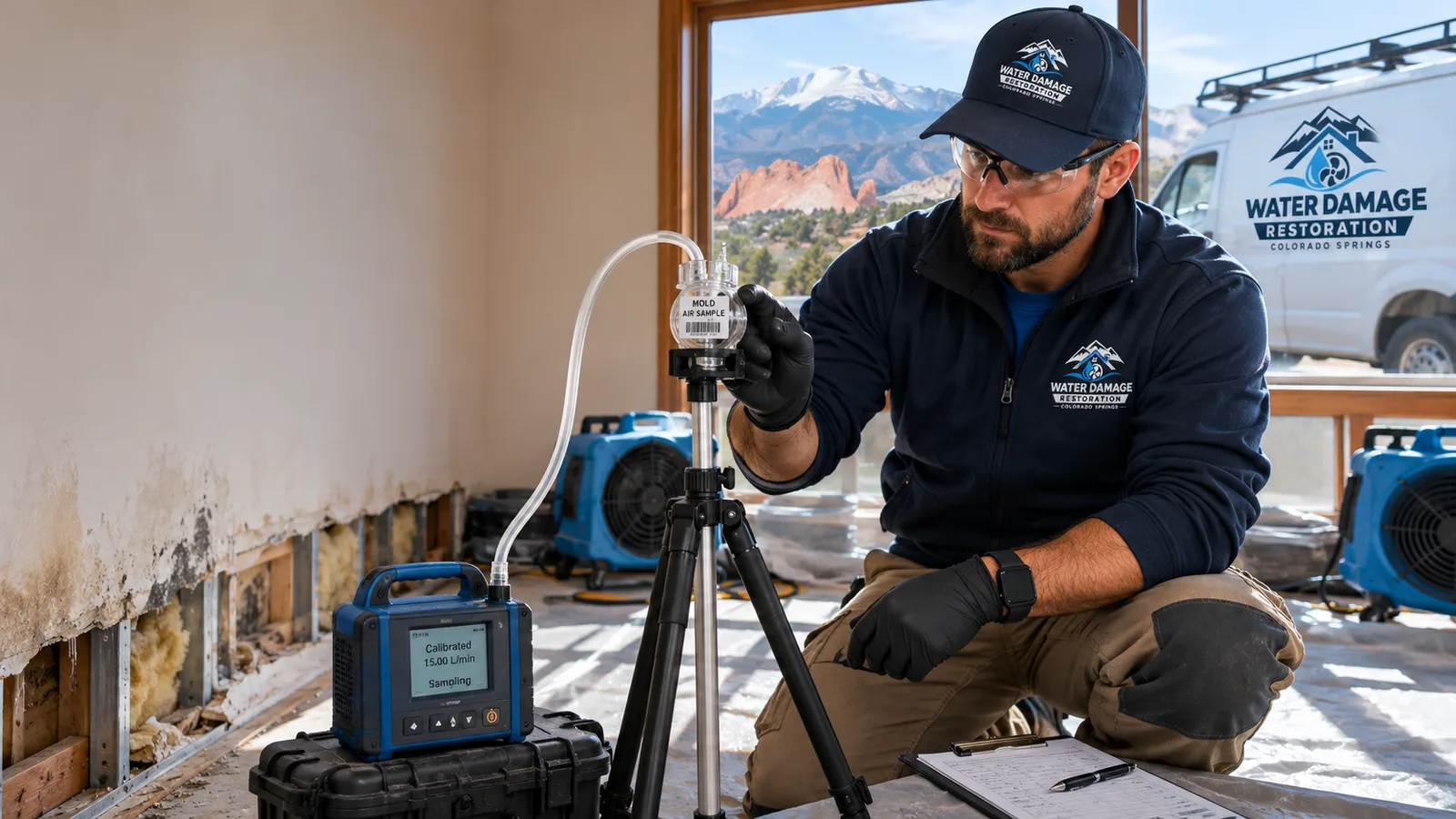
Homeowners in Colorado Springs may request mold testing to determine whether suspected growth is present, where moisture may be contributing, and whether conditions differ between rooms. A contractor may recommend testing after visible discoloration, a persistent musty odor, a plumbing leak, water intrusion, or unexplained damage to drywall, trim, carpet, or stored belongings.
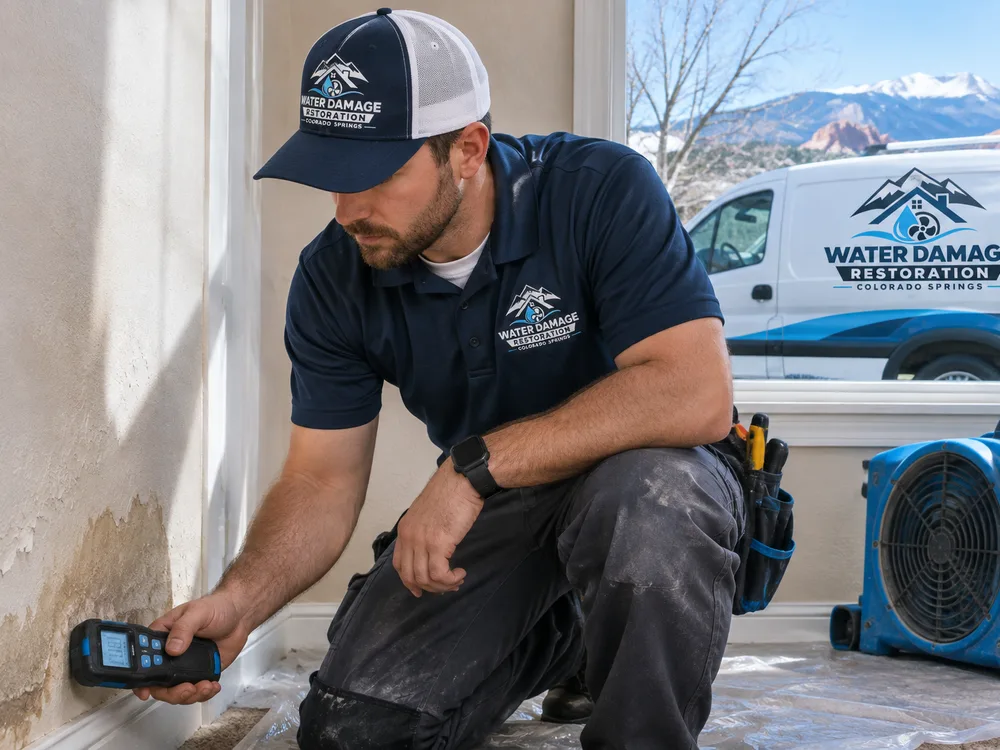
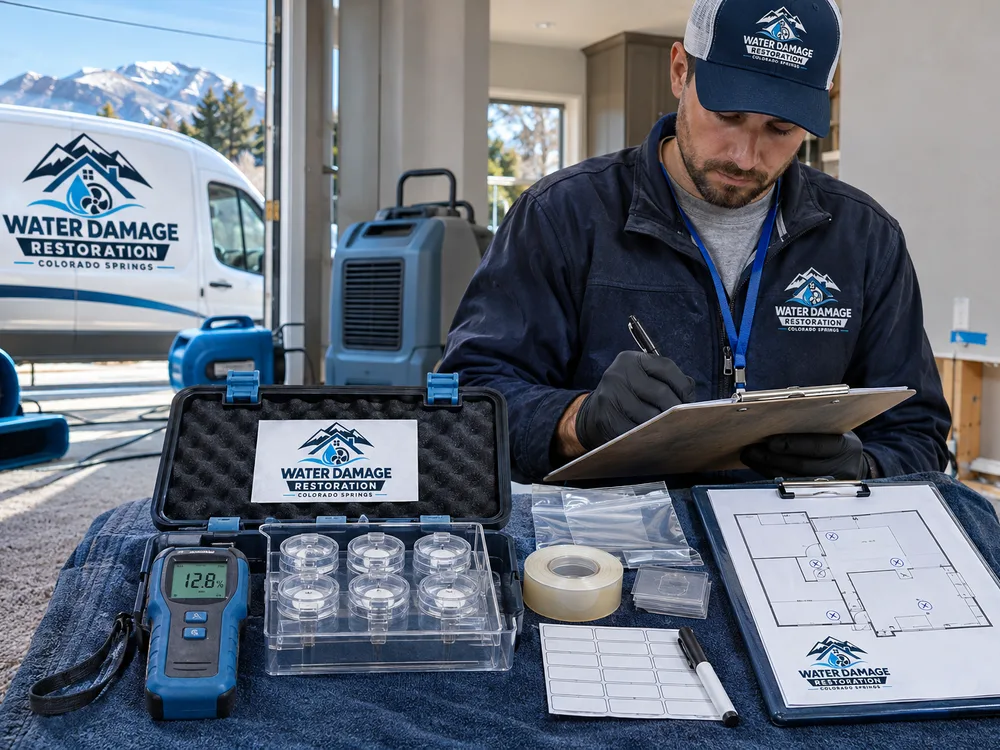
Testing should begin with a visual and moisture assessment. The contractor may examine wall and ceiling surfaces, plumbing fixtures, window areas, attic or crawl-space access points, and materials near a known leak. Moisture meters and infrared cameras can help locate damp areas, but neither instrument identifies mold by itself. Laboratory analysis is used when identification or comparison is needed.
Colorado Springs has a generally dry climate, yet indoor mold can develop wherever moisture remains trapped. Snowmelt entering around foundations, roof leaks after hail or wind, plumbing failures, condensation on cold surfaces, and poorly vented bathrooms can all create localized dampness. Older finishes and wall assemblies may conceal staining behind baseboards, cabinets, or drywall. Testing plans should follow the building conditions rather than relying on a sample taken in an unrelated room.
We also connect callers with water damage restoration contractors throughout Colorado Springs when moisture-related property damage requires work beyond testing. Mold testing remains a separate task: it gathers evidence that can inform the homeowner's next decision.
The assessment may trace plumbing leaks, roof entry points, foundation seepage, condensation, or weak ventilation. Finding the moisture source matters because sampling alone does not correct the condition that allowed growth.
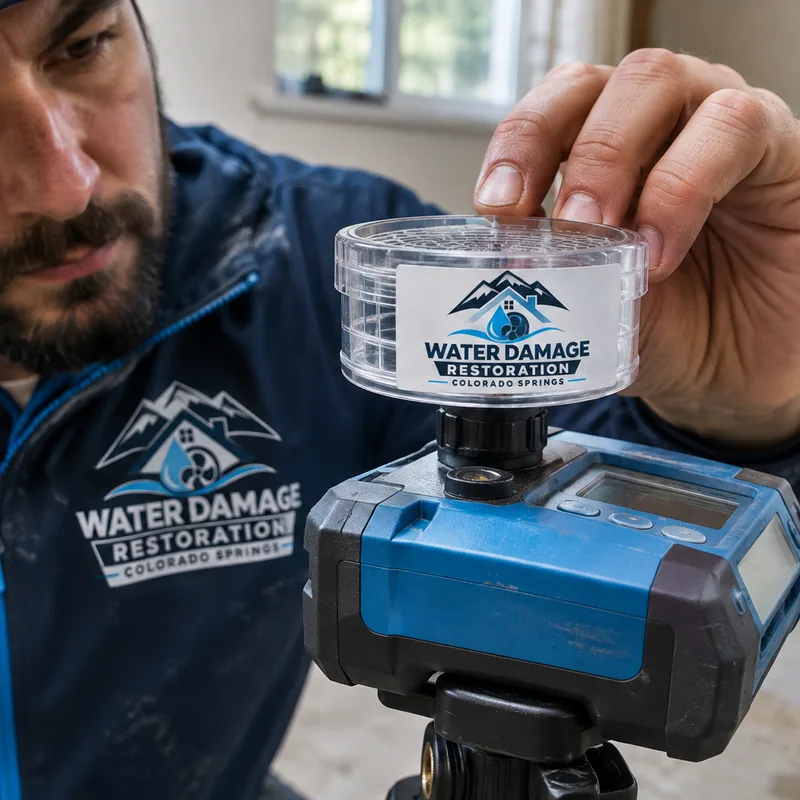
Spore-trap cassettes can collect airborne particles for laboratory analysis. Contractors may take indoor samples and an outdoor comparison sample, then document the location and conditions associated with each one.
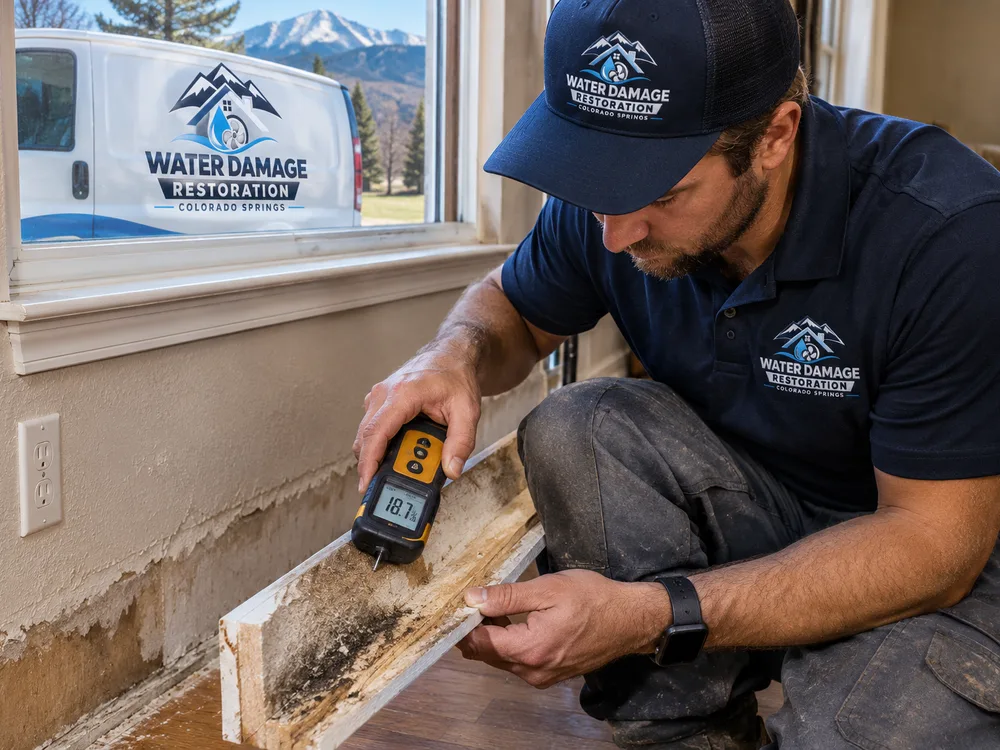
Tape lifts, swabs, or bulk material samples may be used on visible suspect growth. The appropriate method depends on the surface, the purpose of testing, and whether disturbing the material is reasonable.
Moisture meters, careful visual inspection, and thermal imaging may point to damp building materials behind finishes. An infrared image shows temperature differences, so readings must be interpreted alongside physical inspection.
A laboratory report can identify fungal types found in submitted samples and report relative quantities according to the method used. The contractor should explain the sampling context and the limits of the results.
Useful documentation identifies sample locations, observations, moisture readings, collection methods, and laboratory results. Ask what the final report will contain before authorizing testing.
Step 1 of 5
Enter your ZIP code and you are connected directly with a local mold testing contractor who serves that area. There is no form or email wait.
Step 2 of 5
Talk with the contractor about visible staining, odors, known leaks, affected rooms, health-related concerns that influence occupancy decisions, and the reason you are considering testing. The contractor can explain whether an assessment, sampling, or both may fit the situation.
Step 3 of 5
The contractor should identify which areas will be assessed, what sampling methods are proposed, how samples will be documented, and what the laboratory report will provide. You receive the quote from the contractor and decide whether to proceed.
Step 4 of 5
The contractor documents site conditions, checks relevant materials for moisture, and collects any agreed samples using controls intended to avoid cross-contamination. Samples are labeled for laboratory analysis.
Step 5 of 5
Results should be read with the visual and moisture findings. Depending on the evidence, the next step may be correcting moisture, removing affected material, requesting a remediation plan, or confirming conditions after work.
Stop working through a list of numbers. One call connects you with a local contractor who handles mold assessments and sampling in the Colorado Springs area, and you decide what happens after speaking directly.
Testing is not always needed to confirm that visible growth requires attention. It may still be useful when identification affects the planned scope, when conditions must be documented, when hidden spread is suspected, or when post-remediation verification is requested. Ask the contractor how each proposed sample will affect a decision.
An air sample captures airborne particles during a defined sampling period, while a surface sample collects material from a specific area. Air results can compare locations, and surface results can identify fungal material on a suspect spot. Neither method, by itself, establishes the full extent of concealed growth.
A moisture meter or infrared camera cannot confirm mold. A moisture meter measures or estimates moisture conditions in materials, while infrared imaging displays surface-temperature patterns that may guide further investigation. Visual evidence and, when appropriate, laboratory analysis are needed to evaluate suspected growth.
A sound sampling plan targets locations that answer a specific question rather than sampling every room by default. The contractor should consider the suspected moisture source, air movement, visible conditions, room use, and unaffected comparison areas before proposing sample locations.
Follow the contractor's instructions because preparation depends on the sampling method. Activities that stir up dust, unusual ventilation changes, cleaning suspect material, or running certain air-treatment devices may affect airborne conditions. Ask whether windows, heating, cooling, or portable filtration should remain in their normal operating state.
A useful report should connect the laboratory findings with the inspected conditions. Look for sample locations, collection methods, visual observations, relevant moisture readings, laboratory documents, and an explanation of limitations. Ask whether recommendations will distinguish moisture correction, material removal, and any later verification testing.
Ask how the contractor separates assessment decisions from remediation work and how the proposed scope will be documented. Some homeowners prefer an independent assessment when testing will define removal boundaries or verify conditions after remediation. You remain in control of which contractor performs each task.
Call and get connected with a local mold testing contractor who serves Colorado Springs and the surrounding area. Discuss the property directly, review the proposed testing scope, and decide whether to proceed.